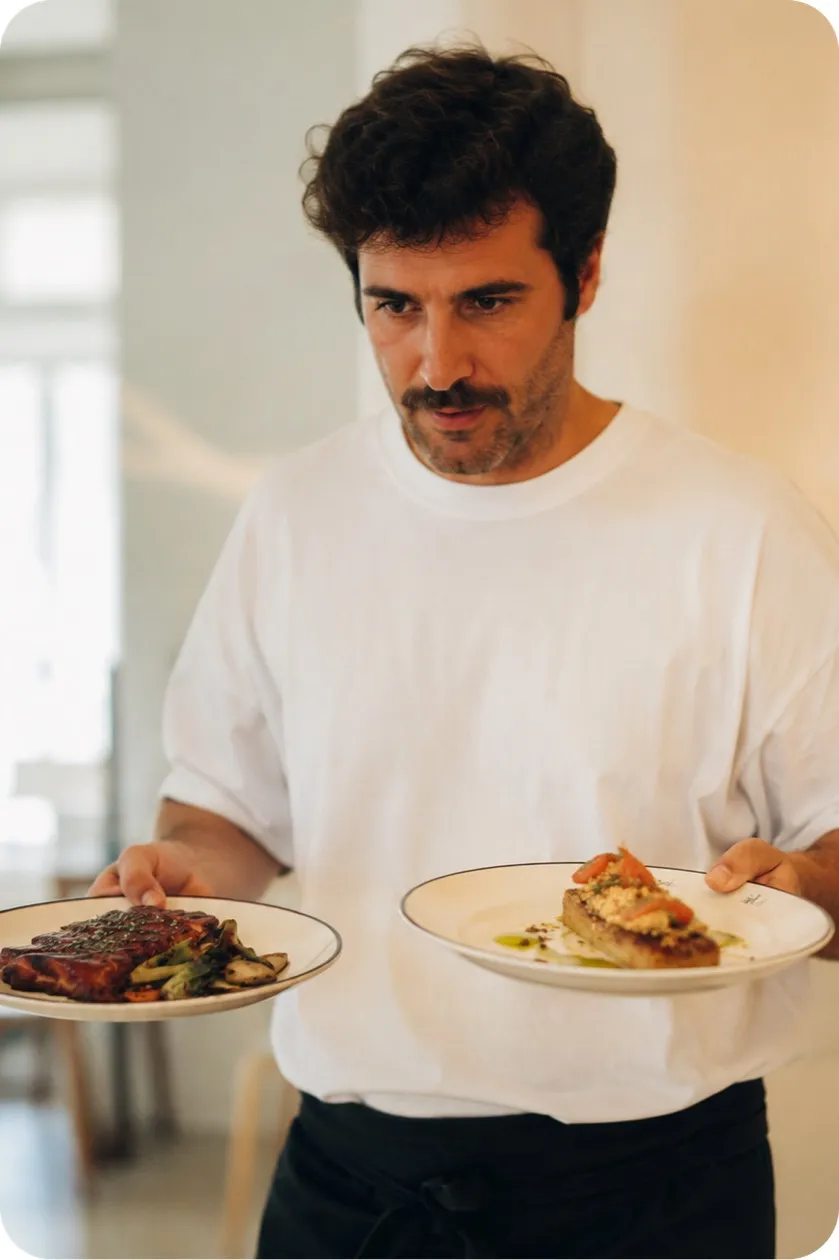
Upload invoices and delivery notes
A photo from your phone, the PDF, your Gmail, an email forward or the delivery note your team uploads from the POS. The AI reads the supplier, the date, the VAT and every line.
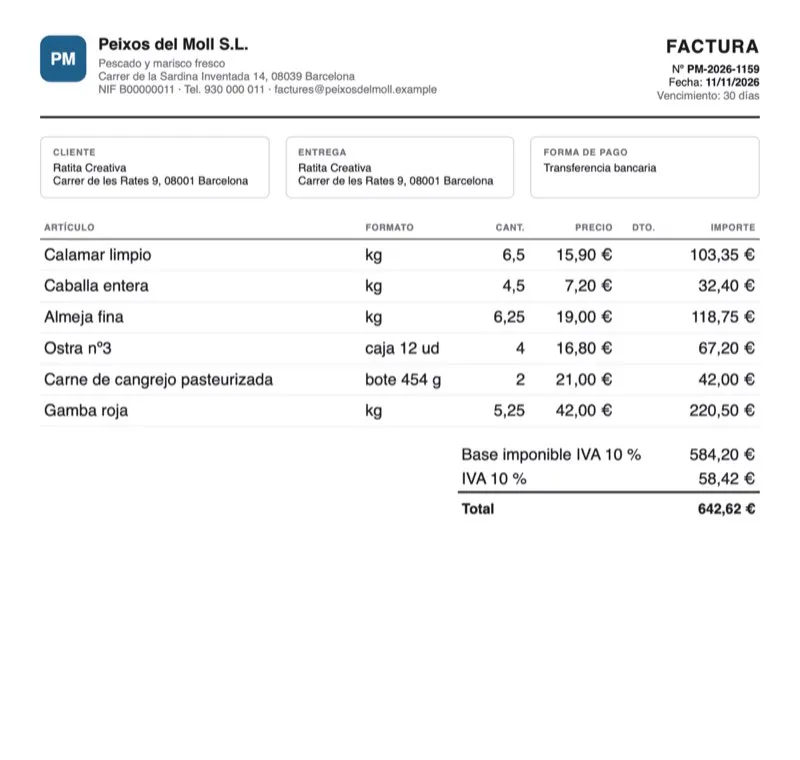
Your purchases and your sales live in the same system. Last.app reads your invoices, keeps the cost of every dish up to date and matches it with real sales from your POS, so you know the food cost and margin of each one.
Costs & recipe costing is Last.app's recipe costing software: it calculates the cost of every dish from your invoices and matches it with what you sell on your POS. You upload your invoices, the AI reads them and every dish has an up-to-date cost. You only review what Last.app flags.
A photo from your phone, the PDF, your Gmail, an email forward or the delivery note your team uploads from the POS. The AI reads the supplier, the date, the VAT and every line.
Ingredients, quantities, waste and prep recipes. If a dish has no recipe, Last.app suggests one based on what you already buy.
Each ingredient uses its average price over the last 30 days, so the cost of a dish changes when your purchases do.
More than it seems. Price rises arrive one at a time, on different invoices, so you notice them late. Last.app brings them together and tells you what to look at.
It compares each purchase with the previous one and works out what it adds up to each month.
If you buy lemons from several suppliers, you see which one costs you more.
Last.app flags what needs a decision from you: a big price rise, a dish above your target or a dish you sell without a recipe. You review it and mark it as seen.
A dish can sell a lot and earn you little, or earn you a lot and barely sell. Last.app matches what you sell on your POS with what each dish costs you and places it on a menu engineering chart. At a glance you see your stars and which dishes to reprice, promote or rethink.
Separate costing software only knows what you buy. To know how much you make on each dish, you have to export your sales or connect it to your POS. In Last.app, the POS and your costs are the same system, so food cost uses the price you actually sell at.
Costs & recipe costing works inside Last.app, which is why it knows what you sell. Last.app is designed so you can run your whole restaurant on a single system, without jumping from one tool to another: fewer programs to pay for and learn, nothing to copy by hand and all your business data in one place.
In the first week I saw my prawn rice was running at 38% food cost. We raised the price by one euro and not a single customer noticed.
Mondays used to be for typing invoices into Excel. Now the team snaps the delivery note from the POS and the cost of every dish is already up to date.
With three locations, I can finally see what each dish earns in each one, not just the average. And it alerts me as soon as a supplier puts a price up.
One price per location with the whole module included.
The only thing that changes is whether you pay monthly or annually.
Pay month by month
Pay for the full year
Included in both plans
El costeo de recetas viene incluido en el POS de Last.app a partir del plan Growth. No se contrata ni se paga por separado: se activa en su cuenta y empieza a usarlo con sus facturas.
adicional al mes por sucursal
Lo paga solo su plan del POS. Si ya tiene Growth o Unlimited, el costeo de recetas ya es suyo.
Planes del POS de Last.app
Lo que incluye el costeo de recetas
Here are the answers to the most common questions. If yours depends on how you work in your restaurant, we'll go through it with you.
Get my questions answeredIt's the sheet that works out how much a dish costs you to make: each ingredient with its quantity, its waste and its price. In Last.app it's calculated with each location's average price over the last 30 days and compared with the real price you sell the dish at, after discounts and excluding VAT.
You divide the cost per portion by the selling price excluding VAT. For example, the arroz quemado in our demo costs €6.36 and sells for €16.55 excluding VAT, so its food cost is 38.4%. Last.app alerts you when a dish goes over 35%, tells you how much you're missing out on each month and suggests the price that gets you back to that target.
Yes. Last.app's AI reads your invoices and delivery notes line by line, including pack sizes and discounts, and if a dish has no recipe it suggests the ingredients based on what you already buy. If an invoice arrives twice, it blocks it, and if a cost doesn't make sense, it corrects it and flags it for you to review.
Costs & recipe costing works inside the Last.app POS, because that's how it calculates food cost with your real sales. If you use a different POS today, talk to our team: we'll look at how you work in your restaurant and tell you the best way to get started. Talk to the team
Last.app also reads Glovo, Uber Eats and Just Eat invoices line by line, with the commission, delivery fees and promotions. In Results you see how much each dish earns you in the dining room and on each platform.
Yes. You can import recipes and products from several costing programs or from your own files (PDF, Excel or photos), and from some programs your previous invoices too.
Yes. Each location sees its own prices and food cost. If you have a central kitchen, your locations order from it and receive the delivery with its delivery note.
Each dish sold deducts its ingredients from stock (dishes inside a combo don't yet). You do stock counts by area with the difference in euros, log waste with its reason and send orders to your suppliers from the same place.
Not yet. Last.app reads and stores all your invoices and delivery notes, but it doesn't export them to accounting software such as A3, Sage or Holded yet.