Pat Patz
The system is logical and easy to learn — tap the dish, add modifications, done.
A distinctive concept that found its place in CDMX
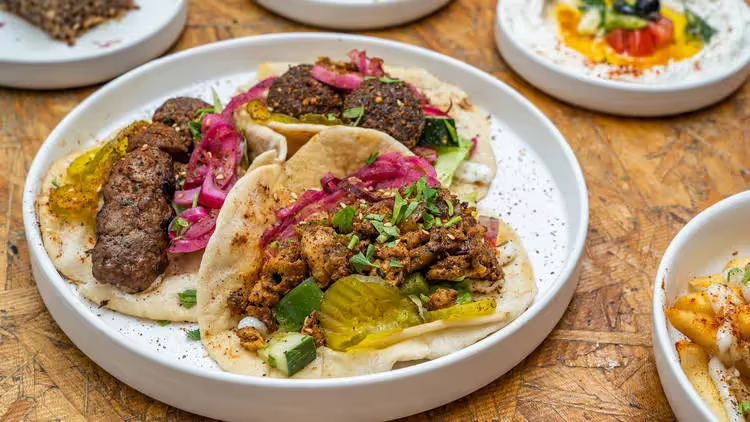
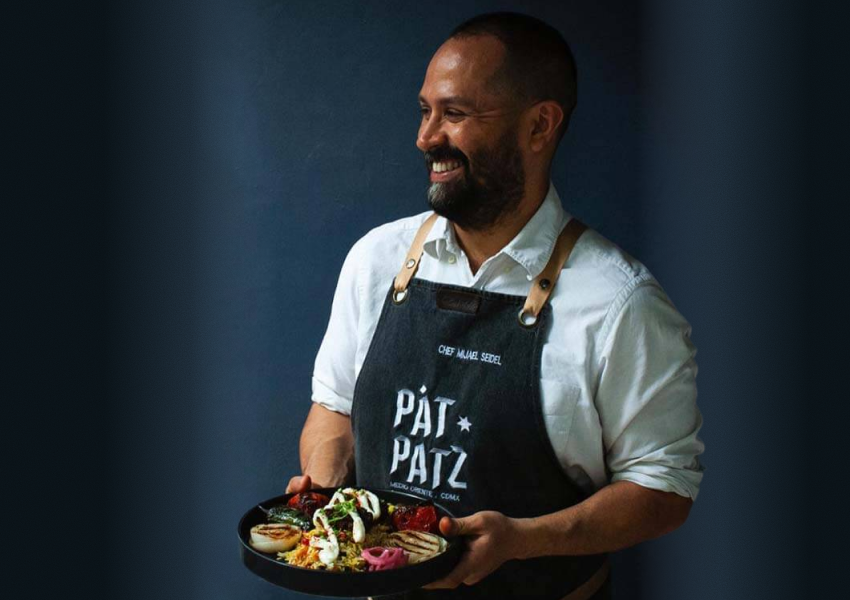
PatPats is an Arabic food restaurant in Mexico City with an uncommon proposition: taking flavors from different Mediterranean cuisines and reinterpreting them for the Mexican palate. The project started eight years ago, began in Colima, and eventually consolidated in CDMX after an evolution that took them from Narvarte to Roma Norte and then to Juárez. Their bet: build a concept with its own identity, capable of surprising diners, connecting with local guests, and competing in one of the most demanding food scenes in the country.
We wanted to bring to Mexico City that flavor of a cuisine that has evolved through many places and adapt it to compete with the taco.
In Mexico, the challenge isn't opening a restaurant — it's keeping it alive
Today, one of the biggest challenges for any restaurant operator in Mexico is staying afloat. The market is saturated, new concepts appear all the time, and customers are increasingly used to trying something new. In that context, having a good idea, an attractive space, or a creative concept is no longer enough — the operation always has to be tightly managed.
PatPats approaches this from a very realistic perspective. In their experience, many businesses open thinking the challenge is building the concept, when in reality the hard part comes after: controlling costs, responding to demand, keeping the operation in order, and staying relevant in an industry where everything changes fast.
It's not an easy business and it's not just about having money or creativity. It's about managing well.
In a market this competitive, technology stops being a nice-to-have
When an operation depends on too many manual processes, the restaurant pays the price in time, energy, and focus. Day to day, that means teams distracted from what matters, heavier closes, less control, and a more fragile experience for the customer.
Technology, when properly implemented, doesn't just "digitize". It brings order. Reduces friction. Gives visibility. And above all, it frees up mental bandwidth so the operator can stop putting out fires and get back to focusing on the product, the service, and growth.
That was exactly the inflection point for Pat Patz.
Want to grow? You have to change
Before joining Last.app, PatPatz was running on another system that gradually fell short as the restaurant grew. The need was no longer just about processing payments or logging sales. The business needed more flexibility, more visibility, and an operation that didn't feel locked into a single hardware logic or increasingly heavy processes.
The team started looking for an alternative that would give them better control of the business, especially around inventory, reporting, and operating across different devices. In that process, Last.app stood out for a very specific combination of factors: accessibility across platforms, operational control, an intuitive user experience, and a solution built to support restaurant growth.
What mattered most was inventory tracking, invoicing, design, and that it was accessible on all platforms.
A fast setup for a team that needed to move quickly
The Last.app implementation at PatPats was, in broad terms, straightforward. Adding products took effort — as it does in any serious migration — but the team's sense was that it was a logical, intuitive, and easy-to-understand tool, and that matters more than it might seem.
In restaurants where the operational pace never lets up, a tool can't depend on endless training or complex processes to start delivering value. Real adoption happens when the system is quick to understand, integrates naturally into the flow of service, and helps the team get through their day without adding weight to it.
At PatPats, Last.app came in as a layer of order on top of an operation that was already growing and needed more solid tools to sustain that evolution.
The system is logical and easy to learn — you click the dish, add modifications, and you're done.
Less manual work, more control over the business
Beyond the system switch, the impact of Last.app on PatPatz's day-to-day shows up in very concrete areas.
One of the most significant has been the Uber integration. Before, the team had to manually log information from every ticket related to that channel. Now that process is substantially reduced, saving them real work — especially at the end of the day, when every minute counts.
They also gained visibility over the cash drawer. Now they can log how much they open with, what outflows and inflows happened throughout the day, and how much the drawer should close with. That gives them order, traceability, and the ability to quickly spot any discrepancy.
They also highlight the value of end-of-day reports and the overall ease of use of the system, which lets them operate quickly without making the team's experience more complicated.
Before, all of that was much more manual. Now the system tells us how much the drawer should close with, and if it doesn't match, you know something wasn't logged.
Technology to power the personality
PatPatz isn't a generic restaurant trying to survive on promotions. It's a brand with a narrative, a clear culinary proposition, and a very specific vision of what it wants to offer diners in Mexico City — surprising flavors, familiar and new at the same time.
But even the most distinctive concepts need operational order to sustain themselves.
PatPats understood something that more and more restaurant operators in Mexico are experiencing firsthand: to hold on, grow, and not get lost in the operation, managing well is no longer optional. And there, the right technology does make the difference.