How to Grow Your Restaurant's Online Store

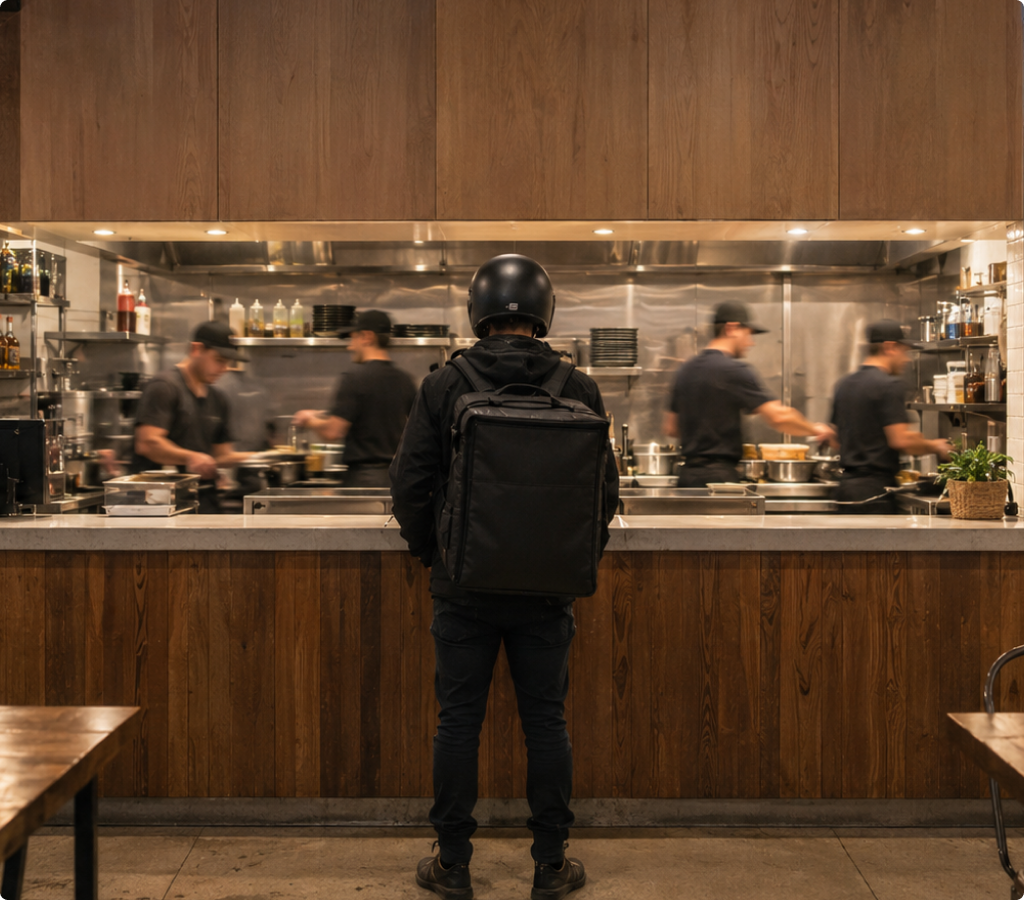
For years, delivery platforms were a kind of golden shortcut for many restaurants. Glovo, Uber Eats, Just Eat and the rest opened up a huge door — more visibility, more orders, more customers, and a fast way to start selling outside the restaurant without having to build everything from scratch.
After that first growth phase came the less comfortable part of the story. Commissions, thinner margins, little direct relationship with the customer, and the feeling that the restaurant is doing most of the work without seeing it pay off.
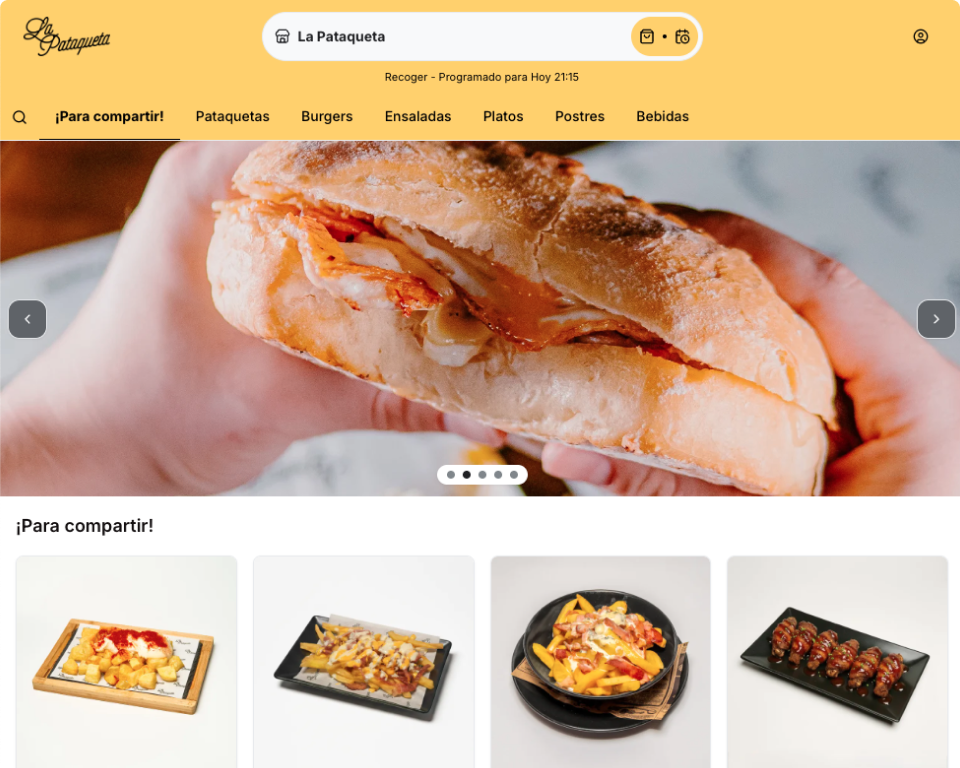
So it was only a matter of time before many businesses started asking themselves a pretty logical question: if the customer already knows my restaurant and likes my food, why not have them order directly through me? That's where online stores for restaurants come in.
Not as some tech-world trend, but as your own channel to sell better, nurture the customer relationship, and take back control of the experience.
Now, going from relying on delivery platforms to building your own channel doesn't happen overnight. It makes a lot of sense, but it also carries risks. It's not enough to open an online store, upload your menu, and wait for orders to roll in on their own.
You have to communicate it well, give customers a reason to change their habits, and make the transition easy. So today, let's look at how to do it right.
Don't shut down your platforms overnight
When you launch your own online store, the fire of change suddenly lights up and you want to blow everything up. We get it, but slow down.
The best move is to keep your platforms open for a while as you start building visibility for your shop. This isn't about cutting off a channel overnight — it's about gradually teaching your customers where you want them to order from now on.
Platforms can still help you capture orders, reach new customers, and maintain volume while your own channel gains momentum. The key is to use them as a bridge, not a final destination.
Your goal during this phase should be to get more and more customers to know they can order directly from you, understand why it's worth doing, and have an experience good enough to make them come back.
Time to spread the word everywhere
Many restaurants launch their online store, share it once on Instagram, and sit back as if their customers operated on some kind of hive mind. Unfortunately, it doesn't work that way.
If you have a customer database, you can send a simple email explaining that customers can now also order directly from your website. You don't need a massive campaign — it's enough to announce the news clearly and, of course, add a small incentive to get people to try it. Let's be honest, that's still what works best.
You can also use the orders still coming through platforms to slip a flyer into the bag. It's a very direct way to tell someone who has already bought from you that next time, they can order through your own channel.
The message can be very simple. Something like "order directly from our website next time and get a free starter" can work better than a long explanation about margins, commissions, and digital strategy.
Give them a reason to try your new channel
Changing a habit isn't always easy. If someone already has the delivery app installed, their address saved, and knows how to order from you there, they'll need a small push to try a different path. Not because they don't want to support you, but because we all tend to repeat what we already know.
That's why, during the launch phase, offering some kind of incentive helps a lot. It could be a small discount, free delivery, a free starter, a drink, a dessert, or a special promotion for the first orders. You don't need to reinvent the wheel either, though if you've had an idea rattling around in your head for the past few months, this is probably the moment to try it.
Once they've tried it, seen that it works well, and received their food without any hassle, the second order becomes much easier. That first order carries a lot of value — not just for the sale itself, but because it opens the door for the customer to make your shop part of their routine.
Talk about it on social media, but don't leave it only there
Your social media matters, of course. Instagram, TikTok, Facebook, your Google Business Profile, and your own website should all communicate that you now have an online store.
But posting one story isn't a launch strategy. For a few weeks, your shop should show up naturally and repeatedly across your channels — in stories, highlights, posts, reels, your bio, physical menus, signage in the restaurant, receipts, take-away bags, and any other spot where a reminder makes sense.
The important thing is to repeat the message, even if it feels a bit much for a few days. Think of it as a temporary push — your shop's launch will have more presence during the first few weeks, and after that you can ease off and turn it into more occasional communication so new customers keep finding out about it too.
You can tell the story from different angles: that customers can now order directly, that there are exclusive dishes in your shop, that ordering from your website helps the restaurant, that there's a launch promotion, or that the process is easier than it looks.
Design a menu built to sell directly
Your online store doesn't have to be an exact copy of what you have on the platforms. In fact, it's better if it isn't.
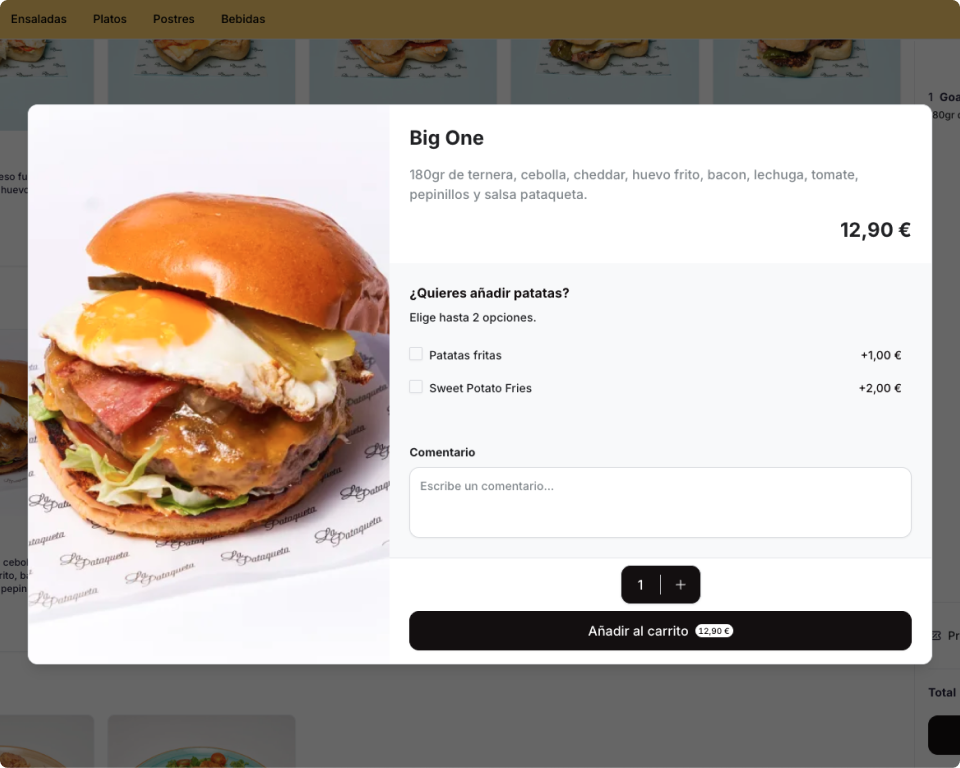
Highlight the dishes that travel best, build more profitable combos, add extras, offer exclusive items, or simplify the menu so orders are easier to complete. Not every dish performs the same once it leaves the restaurant.
You can also use your store to improve your average ticket. A menu for two, a family pack, an easy add-on extra, or a well-placed recommendation can help a lot without complicating the operation.
At the end of the day, delivery is a product built on convenience and indulgence. Customers often order because they don't feel like cooking or because they want to treat themselves. In that context, they may be more open to adding something extra to the order if it makes sense.
Careful — this isn't about raising prices across the whole menu. It's about testing combos, packs, and offers that help you understand how to improve margin without losing appeal for the customer. The interesting part is finding that balance where the customer feels they're getting value and the restaurant manages to sell better.
The idea isn't to raise the whole menu and forget about it. The idea is to build a menu that makes sense for your own delivery, is easy to order from, profitable for the restaurant, and manageable for the kitchen.
Make ordering genuinely easy
The buying experience matters enormously. You can have a great promotion, a well-thought-out menu, and a community that loves you, but if ordering from your shop is complicated, you'll lose orders. And the worst part is that a lot of the time, you won't even know how many you're losing.
Before you push your store hard, test the process as if you were a customer. Go in from your phone, search for a dish, add extras, check the cart, look at the hours, see how the delivery cost shows up, and go all the way to checkout.
If something feels confusing to you, imagine a customer who just wants a quick dinner. The store has to be clear, fast, and comfortable. The customer should understand what they can order, when they'll receive it, how much it'll cost, and how to complete the purchase without having to think too hard.
Make the most of the dining room and take-away
There's no better communication than someone on your team telling a regular customer, naturally, that you can now also take orders directly through your website. You don't need a whole speech. A simple line at the right moment is enough.
You can also lean on small signs at the register, QR codes at the bar, messages on the receipt, or cards tucked into take-away orders. Human contact is still one of the most powerful tools in hospitality. And when you combine it with a well-communicated online store, the message lands much better.
Use your reservations as another touchpoint
If you work with a reservations system that sends automatic emails or reminders, you can use that space to promote your new online store.
This isn't about turning your reservation confirmation email into a giant promotional banner. The important reservation details should still be clear and easy to find.
But you can add a small mention for a few weeks. Something simple, like "if you'd rather enjoy it at home, you can also order directly from our online store," can work really well.
Build a little moment around the launch
Make the most of the moment and have some fun with it. Tell a story and make your customers want to listen to it — or at least make sure it doesn't feel like a buy-one-get-one milk deal at the supermarket.
A good idea is to build a launch week with a special promotion, exclusive dishes, new combos, or a simple social media activity. You don't need to put together a massive campaign or overload the kitchen with twenty new things. It's about creating an excuse to talk about your store and giving customers a reason to check it out.
You can launch a menu available only in your shop, give away a dessert with the first orders, create a special code for regulars, or run a small activity with your community on social media.
Measure what's working
One of the great advantages of having your own online store is that you get a much clearer picture of what's happening with your orders.
You don't need to obsess over a thousand metrics from day one, but it's worth checking a few basics: how many orders come in, which days perform best, which products sell the most, which promotions get used, what your average ticket is, and how many customers come back.
This data helps you make better decisions. Maybe you discover that free delivery converts better than a discount. Or that a specific combo really boosts the average ticket. Or that some dishes work great in the dining room but not so well in delivery. Or that certain days bring in more direct demand than you thought.
Think about repeat orders, not just the first one
Getting a customer to try your shop matters. Getting them to come back is where the real value starts.
Your own online store makes a lot of sense when you use it to build a relationship. You can activate promotions for second orders, send communications to repeat customers, create special offers for regulars, or run one-off campaigns during slower periods.
It's not just about making one sale without paying a commission. It's about building a channel that customers come back to because it's convenient, because they get value, and because ordering directly feels worth it.
Loyalty doesn't always start with an elaborate points program. Sometimes it starts with a good experience, clear communication, and a simple reason to come back.
So, should you ditch the platforms?
So should you shut down your Glovo, Uber Eats, and Just Eat accounts tomorrow? No, of course not — at least not tomorrow. Platforms can still play a role in your strategy. They can help you capture new customers, gain visibility, or maintain volume at certain times.
The problem isn't being on platforms. The problem is depending on them completely. Your online store lets you balance the scale. It gives you your own channel, better margins, more data, and more control over the experience. But for it to work, you need to push it, take care of it, and optimize it just like you would any other important part of your business.
The transition isn't about flipping a switch. It's about gradually moving your customers toward a channel where you have more say. And in a world where margins keep getting tighter, that's worth a lot.