Delivery platforms vs. online shop: which is better for your restaurant?

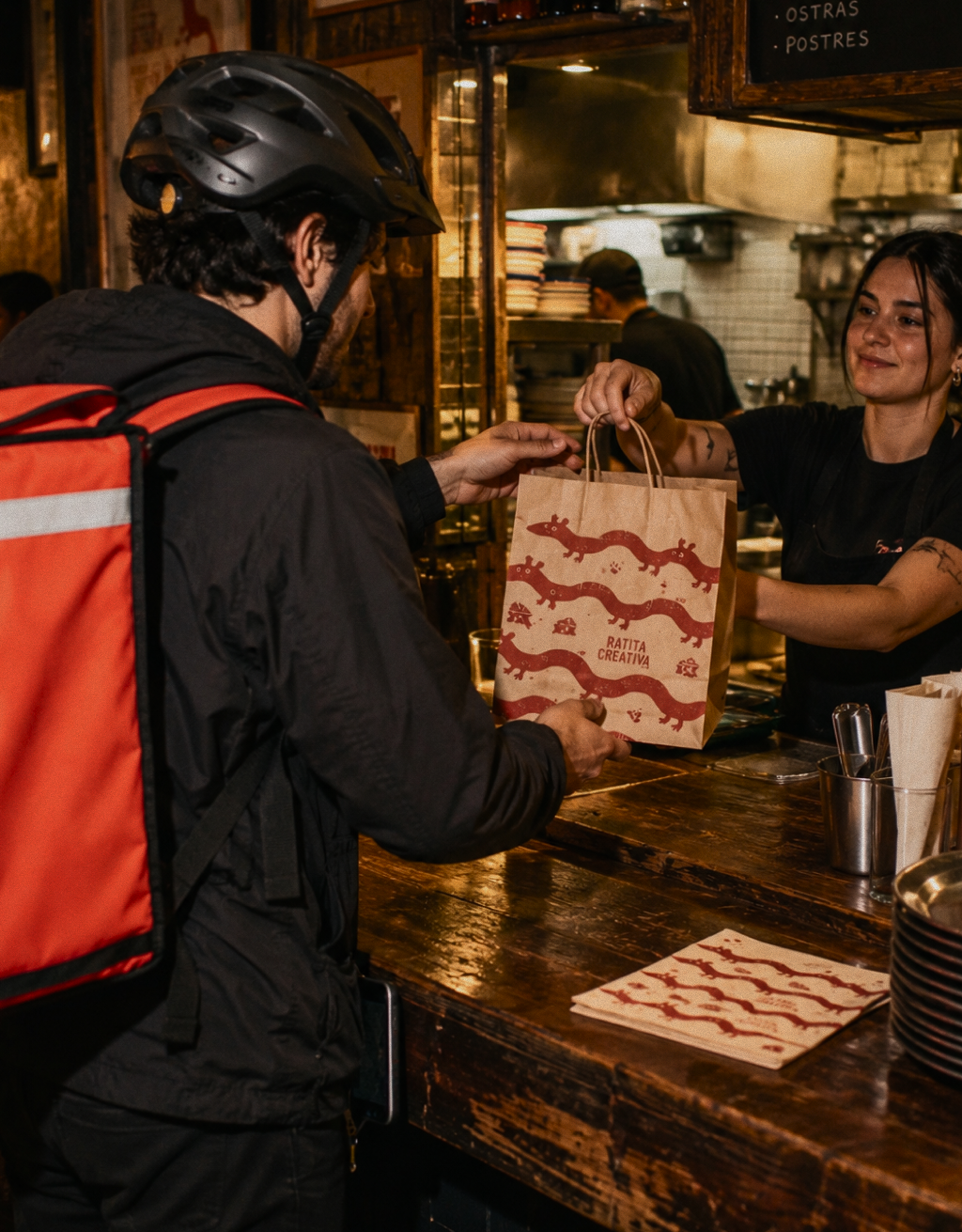
If you run a restaurant and want to start offering delivery, the first names that come to mind are probably Glovo, Uber Eats or Just Eat. That makes sense. Millions of people already use these platforms to decide what to eat, discover restaurants and order without getting off the sofa.
But delivery isn't just about being on these apps. You can also sell through your own online shop, manage orders directly from your POS and build a strategy that brings in new customers without always relying on middlemen.
The key is understanding that delivery platforms, online shops and integrators don't do the same job. Each tool solves a different part of the business and, when you combine them well, they can help you sell more, improve your margins and keep service running smoothly.
Let's look at what each one offers, the pros and cons, and how you can make them work together.
Option 1: Delivery platforms
The main advantage of platforms like Glovo, Uber Eats or Just Eat is pretty simple. They let you sell where most consumers are already looking for something to eat.
Imagine you've just opened a burger joint. You have a good menu and you make incredible burgers, but not many people know you yet. Getting someone to search Google for your restaurant by name would take a small miracle.
On a delivery platform, though, you're in a marketplace where thousands of people browse restaurants every day. Your business can show up among their options even if they've never heard of you.
Depending on the service you sign up for, these platforms can also take care of other parts of delivery, such as payment processing, order management or access to riders. That means you can start offering delivery without building all the infrastructure yourself.
The problem is you're not the only restaurant
Being on a marketplace gives you access to lots of customers, but you're not alone. You're competing with everyone.
You notice this most in big cities. In Barcelona or Madrid, for example, someone looking for burgers might come across dozens of restaurants offering something similar. Just being on the platform isn't enough any more. You also need the customer to pick you.
This is where a few often-overlooked details come in. Your food photos are your shop window. Customers can't taste your food or smell what's coming out of the kitchen. They decide largely on what they see. Attractive, well-lit photos that accurately show your products can make a real difference.
You also need to work on your restaurant's identity. Your name, the design of your menu, your descriptions and your choice of products all need to get across what makes your offer special. If your restaurant has personality, try not to let it disappear once it's inside a delivery app.
And, of course, there are reviews. A restaurant with good ratings builds trust with someone who doesn't know it yet. Offer a good experience, look after delivery times and packaging, reply to reviews when you can and encourage happy customers to leave honest feedback. Never offer incentives in exchange for positive ratings.
What are the disadvantages of delivery platforms?
The best-known one is commission. Platforms charge for the services they provide and, depending on the contract and the delivery model, these costs can take a significant share of each order's value.
Here are the benchmark commissions for Glovo, Uber Eats and Just Eat in Spain, as of October 2026.
| Platform | Platform delivery | Own delivery | Customer collection |
|---|---|---|---|
| Glovo | 30% | 15% | 15% |
| Uber Eats | 30% (33% Uber One) | 15% (13% Uber One) | 15% |
| Just Eat | 25–30% approx. | 15% + €0.30 per order | Depends on contract |
Glovo and Uber Eats publish these rates on their websites for Spain. Just Eat confirms 15% + €0.30 with own delivery; its range for platform-managed delivery is a market estimate, not an officially published rate. Amounts may vary depending on the contract.
But there's another downside that's easy to overlook. The buying experience and much of the customer relationship are in someone else's hands. You can customise certain elements, but you have to work within the marketplace's rules and limits.
Access to customer data and the ability to talk to customers directly also tend to be more limited. Someone might have ordered from you five times and still open the app every Friday to decide where to get dinner.
Platforms are a great channel for winning customers, but handing them your whole delivery strategy means depending on their terms, their visibility and their commissions.
Option 2: Your own online shop
Now let's look at the other side. Say that burger joint has been open for a while. People know the restaurant, some customers come back every week and plenty of them find it by searching for its name.
At that point, it's fair to ask why those regulars should keep ordering through a middleman platform.
This is where your own online shop comes in. An online shop for restaurants lets customers browse your menu, choose what they want and order directly from your business, without going through a third-party marketplace.
More margin on every order
The first advantage is margin. An online shop has its own costs too, such as maintenance, payment processing and, depending on the provider, commission on sales. But these are usually lower than what the big marketplaces charge.
That means you keep a bigger share of each order, especially with customers who already know your restaurant, because you don't need to pay a middleman for them to find you again.
That said, it's worth running the full numbers. If you offer home delivery, you'll also need to factor in the cost of getting orders to the door, whether with your own riders or an external service. And if you spend on advertising to bring customers to your shop, that cost is part of the operation too.
Your restaurant, your identity and your buying experience
This is another big advantage of having your own shop, and probably one of the most important in the long run. When a customer buys directly from your restaurant, you can build an experience that's far more consistent with your brand.
From the page design and photos to how products are presented, your promotions and the checkout, you have much more say over how your business comes across.
You don't have to squeeze your whole identity into someone else's interface. You can look after the small details that help a customer recognise your restaurant, feel comfortable buying and want to come back.
You're also less exposed to the changes platforms make to their apps, promotions or commercial terms. And when something goes wrong during checkout, you're in a better position to review and fix the process.
Of course, if you use an external delivery service, that part of the experience will also depend on how your logistics provider works. But the sales channel, your marketing messages and much of the customer journey are far more under your control.
With Last Shop, for example, you can customise the shop with your restaurant's colours, photos and fonts, offer delivery and collection, and receive orders directly on the Last.app POS.
The downside: nobody walks into a shop they don't know
This is the main difference from the marketplaces. Opening an online shop doesn't mean customers will turn up automatically. You don't have thousands of people browsing restaurants inside an app. Now it's up to you to get your channel seen.
If someone doesn't know your restaurant yet, they're unlikely to go looking for your online shop.
That's why your own shop works especially well when you already have loyal customers, people who know who you are, enjoy your food and have a reason to come back.
It can also bring in new customers from Google, social media or ad campaigns, but getting those visits takes work.
On its own, an online shop is no substitute for a customer acquisition strategy. You need to get the word out, explain why it's worth ordering direct and make buying from you as easy as ordering through a delivery app.
The wild card: all your orders, one operation
So far we've talked about how to get orders. But there's still an important part left: what happens when they start coming in.
Imagine you work with Glovo, Uber Eats and Just Eat. You have a tablet for each platform, each with its own notifications, and you also have dine-in and takeaway orders to deal with.
In the middle of service, orders pile up, one of the tablets goes off, a product sells out and someone has to update availability in several places. It's hardly the best way to work when the kitchen already has its hands full.
That's what delivery integrators are for. An integrator connects the different platforms to your restaurant's management system, usually the POS, so that orders land in one place.
Instead of managing several apps separately, you can handle orders from all your channels in one centralised operation.
What are the benefits of using an integrator?
The most immediate one is less manual work. Orders can go straight into the POS, with their items, modifications and details, without anyone having to re-enter them by hand.
It also cuts the risk of mistakes. When you have to copy orders between different systems, it's easier to forget an extra, mix up a product or waste time double-checking information.
Another advantage is better control over your catalogues and product availability. Depending on the integration, you can update information from your restaurant's system and sync it with the connected platforms.
The Last.app delivery integrator lets you connect channels such as Glovo, Uber Eats and Just Eat to the POS, so you receive orders in a single system and work in step with the rest of the restaurant.
That said, an integrator isn't magic either. It won't bring you new customers or remove platform commissions. And some functions, such as certain promotions, cancellations or delivery settings, may still need to be managed from each marketplace's own portal.
Its job is different: making sure the sales channels you already use don't add unnecessary complexity to service.
So, what delivery software does your restaurant need?
The answer depends on what you want to achieve, because these tools don't all solve the same problem.
| Tool | Main advantage | Main disadvantage |
|---|---|---|
| Glovo, Uber Eats and Just Eat | Visibility and access to potential customers who don't know you yet | Commissions, competition and less control over the customer relationship |
| Your own online shop | More control over your brand, a direct relationship with the customer and lower middleman costs | You have to build your own visibility and loyalty |
| Delivery integrator | Centralises orders and connects your channels to the restaurant's operations | Doesn't generate demand or replace sales or delivery services |
The interesting part is that you don't have to pick just one.
A restaurant can use marketplaces to reach new customers, its online shop to encourage direct ordering and an integrator to manage all those orders without making the team's job harder.
That way, each tool has a clear role in the business.
Our recommendation: combine platforms and an online shop
One of the most common mistakes is thinking that opening an online shop means you have to leave the delivery platforms straight away. It doesn't have to be that way. In fact, if you already work with Glovo, Uber Eats or Just Eat, the best approach is usually to run both channels in parallel for a while.
The platforms can keep bringing you visibility and new customers while you start growing your own channel. During this stage, your goal should be getting more and more people to discover your online shop and realise they can order from you directly.
You can start by telling your regulars, adding the shop to your website and social media, promoting it in the restaurant and offering incentives to try it. If you include promotional material in orders that come through the platforms, check their commercial terms first and respect privacy rules.
Over time, you can move some of your regulars' orders over to your online shop, while keeping the marketplaces as a way to win new sales.
You don't need to close one channel to grow the other. Nor should you measure success only by how many orders you manage to shift. What matters is improving overall profitability and reducing your dependence on middlemen without losing customers along the way.
If you want to go deeper on this, we have a dedicated guide on how to grow your restaurant's online shop, with ideas to get the word out, encourage first orders and keep customers coming back.
Measure before you choose
There's something worth checking before you decide which channel to push. Not every order is worth the same to your business.
A €30 order from a platform can leave you with a different margin from a €30 order placed directly through your online shop. It depends on commissions, delivery costs, any discounts applied and what it cost you to win that customer.
That's why it's important to look at how much each channel actually leaves you with, not just how much revenue it brings in. It's also worth looking at order frequency, average ticket, the number of new customers and how many order again. Platforms can give you more discovery, while your own channel can help you build a more profitable relationship with your regulars.
And don't forget operations. If more orders mean an overloaded kitchen, mounting delays and worse ratings, you may be growing in volume without improving the business.
The goal is for delivery to be profitable and for your restaurant to handle demand without letting service quality slip.